Henrik Schmitz · 17 October 2026
The Evolution of Private Digital Collectives and Their Role in Content Curation
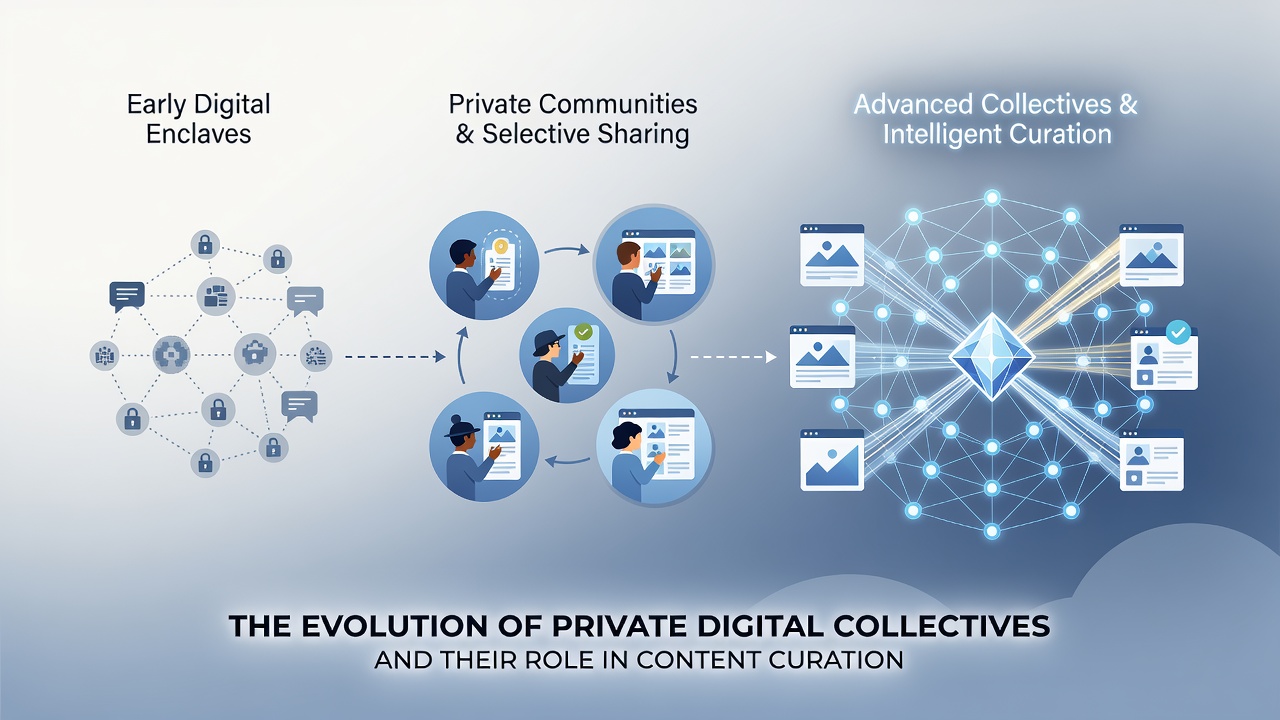
Private digital collectives have developed over several decades from basic bulletin board systems into sophisticated platforms that manage and filter large volumes of information. These groups operate behind access controls such as invitations, passwords, or approval processes, and they focus on organizing content that members consider valuable or reliable. Observers note that their growth parallels broader changes in internet infrastructure and user expectations for controlled environments.
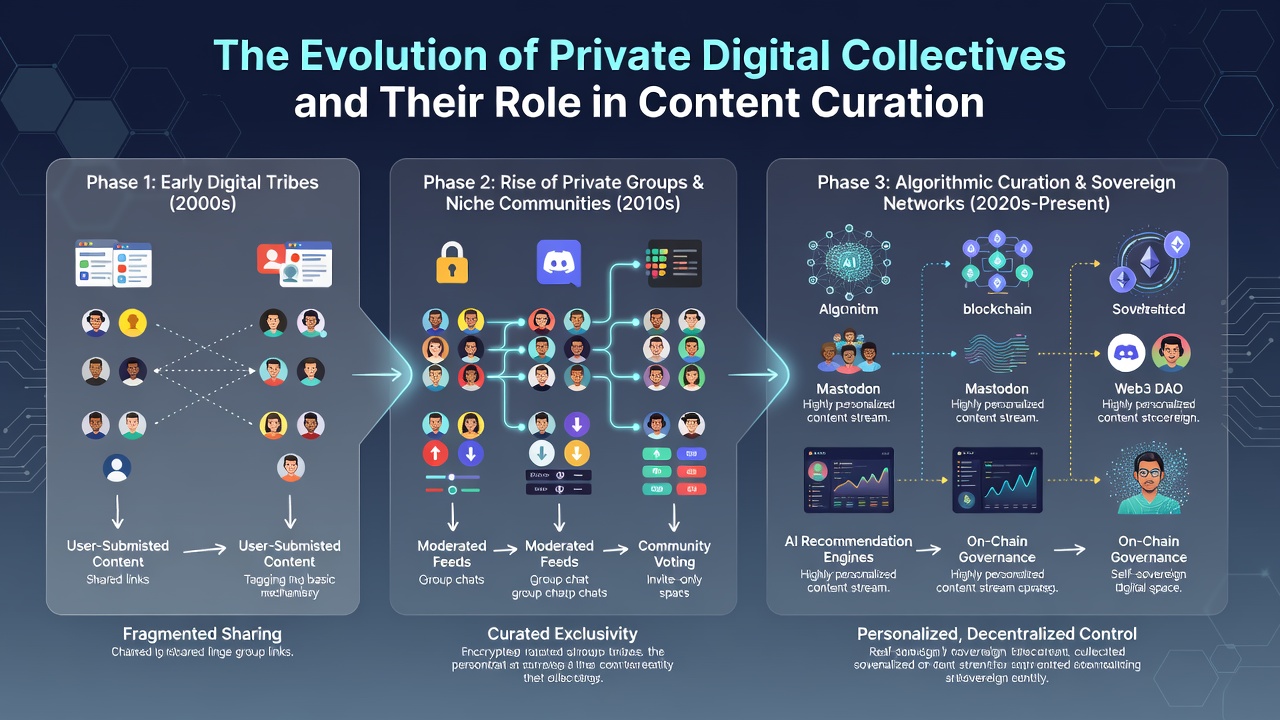
Early examples emerged in the 1980s with systems like Usenet newsgroups and private BBS networks that required dial-up connections and moderator approval. Participants exchanged files, discussions, and technical resources within closed circles. Data from historical records shows these setups handled thousands of daily posts while maintaining strict entry rules that limited participation to verified users.
Transition to Contemporary Platforms
By the 2000s, collective activity shifted toward web forums, IRC channels, and early social media groups with membership gates. Platforms such as private Discord servers and Telegram channels gained prominence in the 2010s as mobile connectivity expanded. Researchers at institutions including those affiliated with the Pew Research Center have documented how these spaces reached hundreds of millions of users worldwide by 2020, with many maintaining tiered access levels to preserve focus on specific topics.
October 2026 brought additional attention when reports from the Canadian Internet Registration Authority highlighted a 35 percent increase in registered private community domains over the prior year. This growth coincided with updates to data protection frameworks across multiple regions that encouraged tighter controls on information sharing. Members in these environments often use custom bots, tagging systems, and voting mechanisms to sort submissions before they reach the wider group.
Mechanisms of Content Selection and Organization
Content curation within private digital collectives typically follows layered processes. Administrators establish guidelines that define acceptable material, then rely on volunteer editors or algorithmic filters to review contributions. Studies from the Australian Communications and Media Authority indicate that such methods reduce duplicate entries by up to 60 percent compared with open platforms. Contributors receive feedback through threaded comments or private messages, which refines the quality of subsequent submissions over time.
Take one documented case involving a collective focused on scientific preprints. Members cross-reference submissions against public databases, flag inconsistencies, and compile annotated bibliographies that circulate only within the group. This approach creates specialized knowledge bases that draw from both mainstream sources and niche archives. Evidence from academic papers published through university repositories shows these curated collections often surface materials overlooked by general search engines.
Geographic distribution plays a role as well. Collectives based in the European Union frequently align their practices with GDPR requirements, while those in other regions adapt to local regulations on data retention. Industry organizations such as the Internet Society have tracked how these adaptations influence the types of content preserved, with emphasis on metadata accuracy and version control.
Expansion and Integration Trends
Integration with external tools has become common. Many collectives connect to cloud storage services, version control repositories, and encrypted messaging applications to maintain archives across devices. Figures from research reports reveal that average active collectives now store between 500 gigabytes and several terabytes of curated files, including documents, media, and datasets. Access logs help track usage patterns, allowing organizers to adjust visibility settings and prevent unauthorized distribution.
Those who have examined membership dynamics observe that retention rates improve when curation tasks rotate among participants. Training sessions conducted through shared documents or recorded sessions help new members learn the established standards quickly. This distributed model reduces bottlenecks that once limited scalability in earlier systems.
Conclusion
Private digital collectives continue to adapt as technology and regulatory landscapes shift. Their structured approaches to content selection support focused information management that differs from public platforms. Records through late 2026 show sustained activity across multiple sectors, with ongoing refinements to access protocols and archival methods. These developments reflect broader patterns in how groups organize knowledge outside open networks.