Sage Lorenz · 19 September 2026
Mapping the Pathways of Information Flow in Niche Virtual Territories
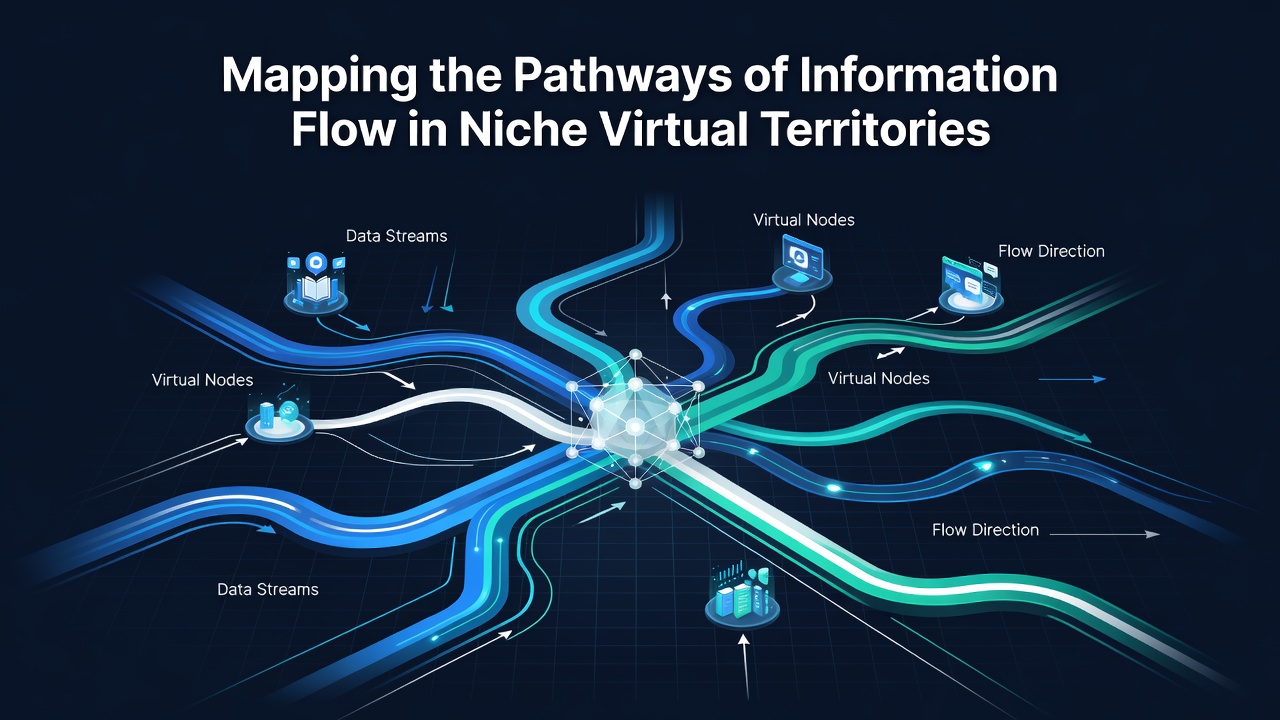
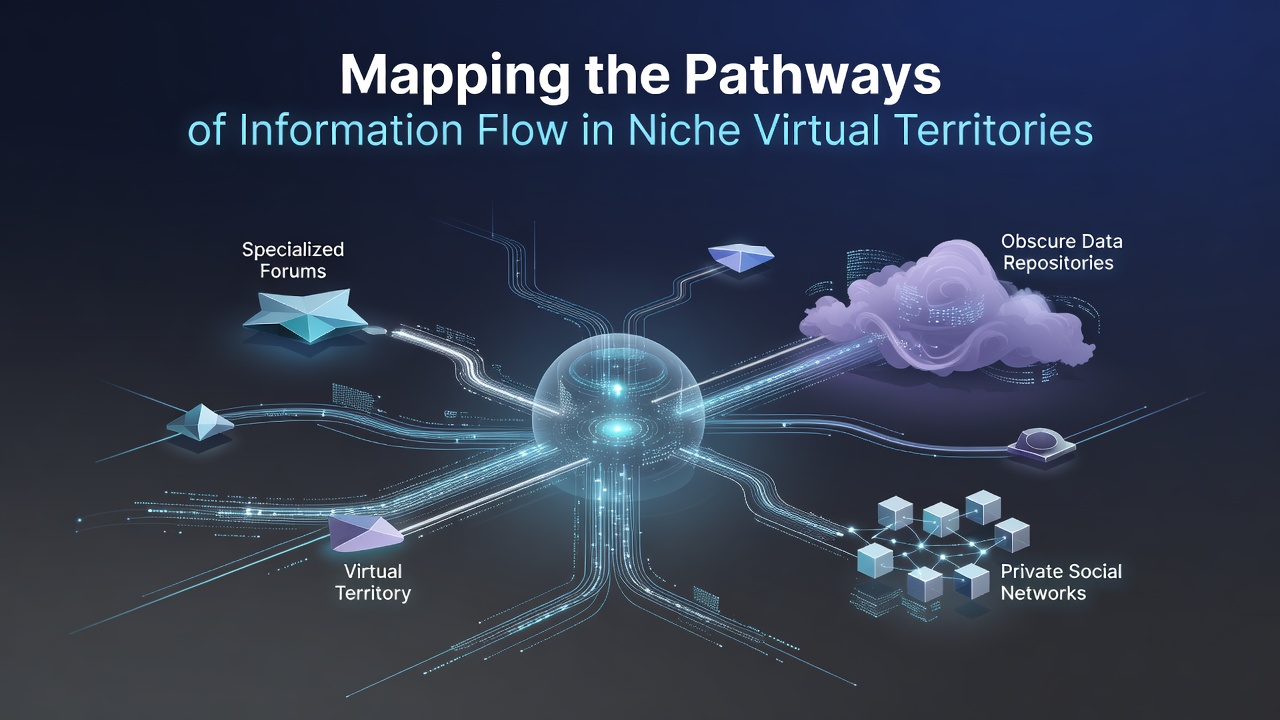
Information moves through niche virtual territories along distinct routes shaped by platform architecture, user behaviors, and moderation practices, and researchers continue to develop methods for tracing these movements with increasing precision. These territories encompass specialized forums, closed Discord servers, private Slack workspaces, and topic-specific wikis where participants exchange knowledge on subjects ranging from rare plant cultivation to retro computing hardware. Observers note that the flow often follows both visible public channels and encrypted direct messages, creating layered patterns that standard analytics tools struggle to capture in full.
Core Structures Within Niche Spaces
Each territory maintains its own hierarchy of access points, and data indicates that core members frequently act as gatekeepers who relay updates to peripheral participants through curated summaries or pinned announcements. Studies from academic institutions show that information velocity increases when territories incorporate threaded discussions alongside real-time chat, because users can follow both immediate reactions and archived threads without losing context. In September 2026 platform updates across several major hosting providers introduced granular permission tiers that further segmented these pathways, allowing administrators to route sensitive updates exclusively to verified subgroups while keeping general announcements open to all.
Techniques for Tracing Movement
Analysts apply network graphing software to log timestamps, sender-receiver pairs, and content hashes, and this approach reveals clusters where information recirculates among the same small groups before leaking outward. Government reports from the European Union highlight similar mapping exercises conducted on regulated digital marketplaces, where authorities tracked how policy documents circulated among trader communities ahead of compliance deadlines. Those who have examined server logs find that emoji reactions and reaction chains often serve as early indicators of emerging consensus, allowing researchers to predict which topics will gain traction hours before formal posts appear.
External Connections and Leakage Points
Many territories maintain deliberate bridges to broader platforms, and OECD digital economy reports document how content migrates from closed groups onto public repositories through screen captures or quote posts. These leakage points become critical during events such as product recalls or regulatory announcements, when participants rapidly export internal findings to external audiences. Canadian regulatory filings from Innovation, Science and Economic Development Canada describe parallel patterns in specialized agricultural forums where growers shared compliance strategies that later appeared in mainstream industry publications.
Measurement Challenges and Available Data
Quantifying exact volumes remains difficult because many exchanges occur in ephemeral voice channels or disappearing-message features, yet aggregated metadata from multiple territories shows consistent daily peaks aligned with timezone clusters in North America and Europe. Research papers published through university networks reveal that information half-life in these spaces averages between four and twelve hours before dilution occurs through repetition or contradiction. September 2026 brought new logging standards on several hosting platforms that now expose more metadata to researchers under controlled access agreements, improving teh accuracy of flow models without compromising participant privacy settings.
Implications for Platform Design
Developers incorporate these mapping insights when refining notification systems, and the result is more targeted delivery that reduces noise while preserving discovery pathways for newcomers. Industry associations tracking virtual community metrics report that territories employing visual flow indicators, such as activity heatmaps, retain participants at higher rates because members can quickly locate active discussions. External audits conducted by research institutes continue to validate these design adjustments against real-world traffic logs collected across dozens of active territories.
Conclusion
Mapping efforts in niche virtual territories continue to evolve alongside platform capabilities and regulatory expectations, and the resulting diagrams provide clearer views of how knowledge travels within bounded digital environments. Continued refinement of these techniques supports better moderation tools and more efficient knowledge preservation across specialized communities.